 Written and reviewed by Josh Kohanim, Esq., California Bar No. 328609 · Reviewed
In this guide
A concussion diagnosed or suspected after a Los Angeles crash has a mechanism the emergency department did not rule out, a first 48 hours that creates the record, and a return to work that becomes evidence. Long-term symptoms are covered in our guide to post-concussion syndrome, and the evidence dispute is covered in how a mild traumatic brain injury is proved.
Brain injury mechanics
The Centers for Disease Control and Prevention puts the mechanism in the definition itself. A concussion, also called a mild traumatic brain injury, is caused by a bump, blow, or jolt to the head, or by a hit to the body that causes the head and brain to move quickly back and forth. The CDC describes the brain bouncing or twisting inside the skull, which triggers chemical changes and damage to brain cells.
The National Institute of Neurological Disorders and Stroke (NINDS) calls this a non-penetrating or closed head injury: an external force strong enough to move the brain within the skull. It also describes the pattern that follows an abrupt deceleration, which is what a car crash is. Bruising can appear directly under the impact site, and more often on the opposite side of the brain, because the brain bounces back and forth. NINDS notes those bruises can appear after a delay of hours to a day.
The seatbelt and the airbag can both do their job, your head can miss the pillar, and you can still have a real brain injury. The other driver's insurance adjuster will treat the absence of a head strike as the absence of an injury, and the medical definitions say otherwise.
The emergency department workup
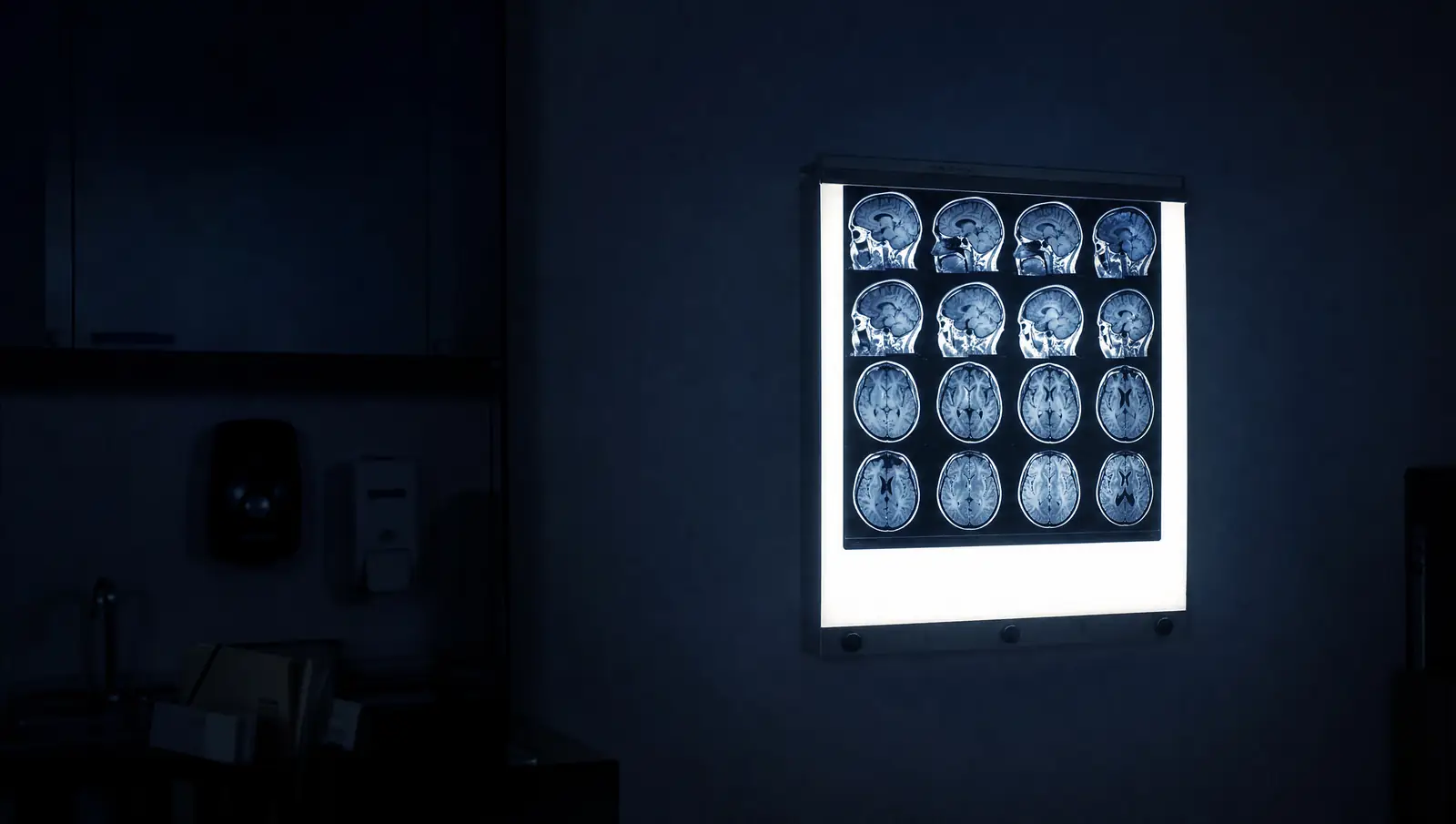
A head CT in the emergency department is a decision tool. NINDS describes what it shows: a skull fracture, and brain bruising, bleeding, or swelling. Those are the findings that change what happens in the next hour, including whether a neurosurgeon is called. MRI is more sensitive and picks up subtler changes a CT scan may miss, and it is usually ordered later, if at all.
| The question | Does the CT answer it |
|---|---|
| Is there bleeding around or inside the brain | Yes |
| Is the skull fractured | Yes |
| Is there swelling that needs surgery tonight | Yes |
| Do you have a concussion | No |
| Will you be able to concentrate at work in the months ahead | No |
NINDS is direct about the limit. Even with advances in imaging resolution, currently available and clinically validated imaging technologies, blood tests, and other measures cannot always detect damage from mild, concussive injuries. A normal scan and a discharge at 2 a.m. mean the hospital found no need for an operation, not that you are uninjured.
first 48 hours after a crash
- Get examined the same day, even if you feel fine. The visit creates the record, and the record is what dates your symptoms to the crash instead of to something later.
- Say every symptom out loud, not only the worst one. Headache, light sensitivity, ringing, nausea, trouble finding words, feeling slowed down. If it is not in the chart, it did not happen.
- Have someone stay with you the first night. The person who notices you repeating a question is a witness you will need later.
- Rest the brain as well as the body. NINDS describes treatment for mild TBI as symptom relief and brain rest, which means avoiding activities that demand concentration or attention.
- Do not drink alcohol and do not start driving again on your own judgment. Ask the provider when both are safe, and write down the answer.
- Go back immediately if the picture changes. NINDS lists seizures, repeated vomiting, unequal pupil size, clear fluid draining from the nose or ears, and new weakness or slurred speech among the reasons to seek immediate care within the first 24 hours.
In our files, the most common gap is a skipped follow-up appointment. People stay home because the emergency department said the scan was clear, then call a lawyer in week six with nothing in between. That empty stretch costs a concussion client more than anything else, and it is avoidable.
Returning to work and school
NINDS advises people with mild TBI to make a follow-up appointment to confirm the progress of their recovery, to raise new or ongoing symptoms and ask how to treat them, and to pay attention to new signs even when they seem unrelated to the injury, including mood swings or unusual irritability weeks afterward. It also says that after symptoms go away, people should return to daily activities gradually, and only with permission from a doctor.
For a child or teenager with a sports-related concussion, NINDS says to stop playing immediately and return only after being cleared by a doctor who treats concussions. The reason is the second hit phenomenon: a second concussion closely following the first, which NINDS says can lead to permanent damage or even death in some cases. NINDS also notes that while most people recover fully from a first concussion within a few weeks, recovery from a second or third is generally slower.
In a claim, the return to work is also evidence. Reduced hours, a changed role, a written accommodation, or a missed deadline that never used to happen all count, and only if someone documents them at the time. Tell your supervisor in writing and keep the email.
Warning signs after a concussion
- Older adults, and anyone on a blood thinner. NINDS notes that blood thinning medications may increase the risk of bleeding in the brain, and that subdural hematomas, bleeding between the membranes covering the brain, are very common in older adults. A delayed headache in this group is an emergency.
- Young children. They cannot report the symptom. NINDS tells caregivers to watch instead for changes in eating or nursing, crying that cannot be consoled, loss of interest in a favorite toy, unsteady walking, and the loss of a skill such as toilet training.
- Another explanation fits better. Neck injuries, medication changes, and sleep loss after a crash produce overlapping symptoms. A treating physician sorting that out helps the claim more than an attorney insisting it is all the concussion.
- A previous concussion inside the recovery window. If you were still symptomatic from an earlier injury, both the medicine and the case change, and the earlier records become central.
The first two weeks
The first two weeks decide the rest because they are the only two weeks that create evidence written down at the time. A same-day visit, a complete symptom list, a follow-up appointment, and a written note to your employer are worth more later than any argument anyone makes on your behalf in year two.
If symptoms are still present after those two weeks, read our guide to post-concussion syndrome next. If the insurer has started questioning whether the crash caused anything, go to how a mild traumatic brain injury is proved. The claim as a whole is on our Los Angeles brain injury attorney page, the crash side is on our Los Angeles car accident lawyer page, and the rest of what a crash does to a body is in car accident injuries.