 Written and reviewed by Josh Kohanim, Esq., California Bar No. 328609 · Reviewed
Quick questions
Key issues in brain injury claims
We represent people in Los Angeles County who took a blow to the head, or a hit to the body that threw the head, and the families reading on their behalf. The claim turns on what a traumatic brain injury is, how it is proved when the imaging is clean, the damages categories, the deadlines, and when a case is weak. Workers' compensation, medical negligence during treatment, and the criminal case are separate matters.
Every one of these files turns on two questions: whether there is a brain injury, and whether this event caused it. Liability, meaning who ran the light or left the spill on the floor, is usually the smaller dispute. The insurer spends its money arguing that someone who walked away and scored a 15, the top score on the hospital's Glasgow Coma Scale, cannot be as hurt as they say.
Traumatic brain injury defined
A traumatic brain injury (TBI) is a brain injury caused by an outside force. The National Institute of Neurological Disorders and Stroke (NINDS) divides them in two. A penetrating TBI happens when an object pierces the skull. A non-penetrating TBI, also called a closed head injury, is caused by an external force strong enough to move the brain inside the skull.
NINDS also separates primary from secondary injury. Primary damage is immediate. Secondary damage refers to changes over hours to days after the first trauma, including bleeding that keeps expanding and rising pressure inside the skull. That timeline is why an emergency department can clear a patient at night who is worse several days later.
A concussion is a type of mild TBI. The Centers for Disease Control and Prevention (CDC) describes it as caused by a bump, blow, or jolt to the head, or by a hit to the body that causes the head and brain to move quickly back and forth, and states that most TBIs each year are mild TBIs or concussions. Loss of consciousness means being knocked out, for any length of time. Post-traumatic amnesia is the memory gap around the event. Neither is required for the diagnosis.
Three other terms come up constantly. Diffuse axonal injury is widespread damage to the brain's white matter, which NINDS calls one of the most common types of TBI. A subdural hematoma is bleeding between the dura and arachnoid membranes, which NINDS notes is very common in older adults after a fall. A coup-contrecoup pattern is bruising under the impact site and, more often, on the opposite side of the brain, from the head decelerating abruptly.
Severity classifications
The Glasgow Coma Scale is the number the emergency department writes down. The Royal College of Physicians and Surgeons of Glasgow, where the scale was developed, states that it has three components, eye, verbal, and motor, and that its possible values range from 3 to 15. The StatPearls entry on the Glasgow Coma Scale, on the National Library of Medicine's Bookshelf and last updated June 17, 2026, sets out the classification built on that score.
| Severity | Glasgow Coma Scale | What the score does not measure |
|---|---|---|
| Mild | 13 to 15 | Whether symptoms last a week or a year |
| Moderate | 9 to 12 | Memory, mood, and fatigue six months later |
| Severe | 3 to 8 | The cost of the care that follows |
A 15 describes a person who opens their eyes, speaks in sentences, and follows commands, which describes most of our clients. The scale was built to triage the airway in the first hour, not to predict who is back at work in three weeks. NINDS held a workshop in January 2024 on moving past the mild, moderate, and severe labels because they are too coarse for research.
Causes of brain injuries
The medicine is the same in every mechanism. The liability analysis is not, and who owed the duty and which insurer responds depends on how the head was hurt.
Crashes
A car accident does not have to put your head through the window. The head is thrown and stopped, and the brain moves inside the skull. Our guide to concussion after a car accident is written for the first week. The same mechanism drives our truck, motorcycle, pedestrian, and bicycle cases. Our list of car accident injuries covers what else arrives with one.
Falls on unsafe property
Falls are the most common cause of TBI, according to NINDS, and they land hardest on the oldest patients. CDC data show adults 75 and older accounted for about 32 percent of TBI-related hospitalizations in 2020 and about 28 percent of TBI-related deaths in 2023. On a slip and fall or a premises liability claim, the dispute is whether the owner knew or should have known about the hazard.
Struck by an object
A dropped tool, a swinging load, or falling formwork can cause a brain injury, and NINDS lists being struck by or against an object as a major cause of TBI. On a job site, a construction accident claim usually runs against a contractor or an equipment owner rather than the employer.
Amusement rides
A brain does not need a direct blow to bleed. MedlinePlus explains that with a subdural hematoma, "tiny veins between the surface of the brain and its outer covering (the dura) stretch and tear, allowing blood to collect," and its head injury page notes that symptoms "may develop slowly over several hours or days." Whether a ride's motion alone can do that is the dispute at the center of the lawsuits over the X2 roller coaster at Six Flags Magic Mountain. Riders allege it left them with bleeding in or around the brain, and on September 29, 2026 Six Flags announced it would permanently retire the ride. Our guide to the Six Flags X2 brain injury claims sets out what the public record shows, and our guide to amusement park and ride injuries covers the law for every California park.
Assaults on poorly secured property
When someone is beaten in a parking structure or a stairwell, the brain injury and the security failure are two separate proof problems. Our guide to negligent security covers the second.
When the injury is severe, the case is no longer about a single diagnosis. It becomes a catastrophic injury case, often alongside a spinal cord injury, and if the person does not survive it becomes a wrongful death claim brought by the family.
Early symptoms to watch
NINDS advises seeking immediate medical attention for any of the following, especially within the first 24 hours after a head injury. If you have any of them, return to the hospital tonight.
- Headache, convulsions, or seizures
- Blurred or double vision, or unequal pupil size
- Clear fluid draining from the nose or ears
- Nausea and vomiting
- Slurred speech, weakness in the arms, legs, or face, or loss of balance
The symptoms that carry a claim are quieter. NINDS groups them as cognitive and behavioral, including confusion, trouble remembering or concentrating, changed sleep, and irritability, and as perception and sensation, including dizziness, ringing in the ears, sensitivity to light or sound, mood swings, and fatigue. Little of that list is visible to a stranger.
Children often do not report any of it. NINDS notes a child may be unable to tell a caregiver they feel different, and lists what adults should watch instead: changes in eating, crying that cannot be consoled, loss of interest in a favorite toy, unsteady walking, and the loss of a skill such as toilet training.
Symptoms that arrive late are ordinary, not suspicious. NINDS describes emotional symptoms such as frustration and irritability as tending to develop during recovery rather than at the scene. Insurance adjusters read the same gap as proof that nothing happened. When symptoms are still present months later, our guide to post-concussion syndrome claims applies.
Elements of a brain injury claim
Negligence is the failure to use reasonable care. California builds it on Civil Code section 1714(a), which makes everyone responsible for an injury caused by their want of ordinary care. CACI No. 400, a standard California jury instruction, requires proof of three things: that the defendant was negligent, that the plaintiff was harmed, and that the negligence was a substantial factor in causing the harm.
Comparative fault is the rule that lets a jury assign you a share of the blame and reduce your damages by it. The defense rarely spends much there. Its money goes to causation, because that is where a normal scan and a two week gap in treatment do their work. The statute of limitations, the outside deadline to file suit, is the other place a claim ends without ever being argued.
Concussions with a normal scan
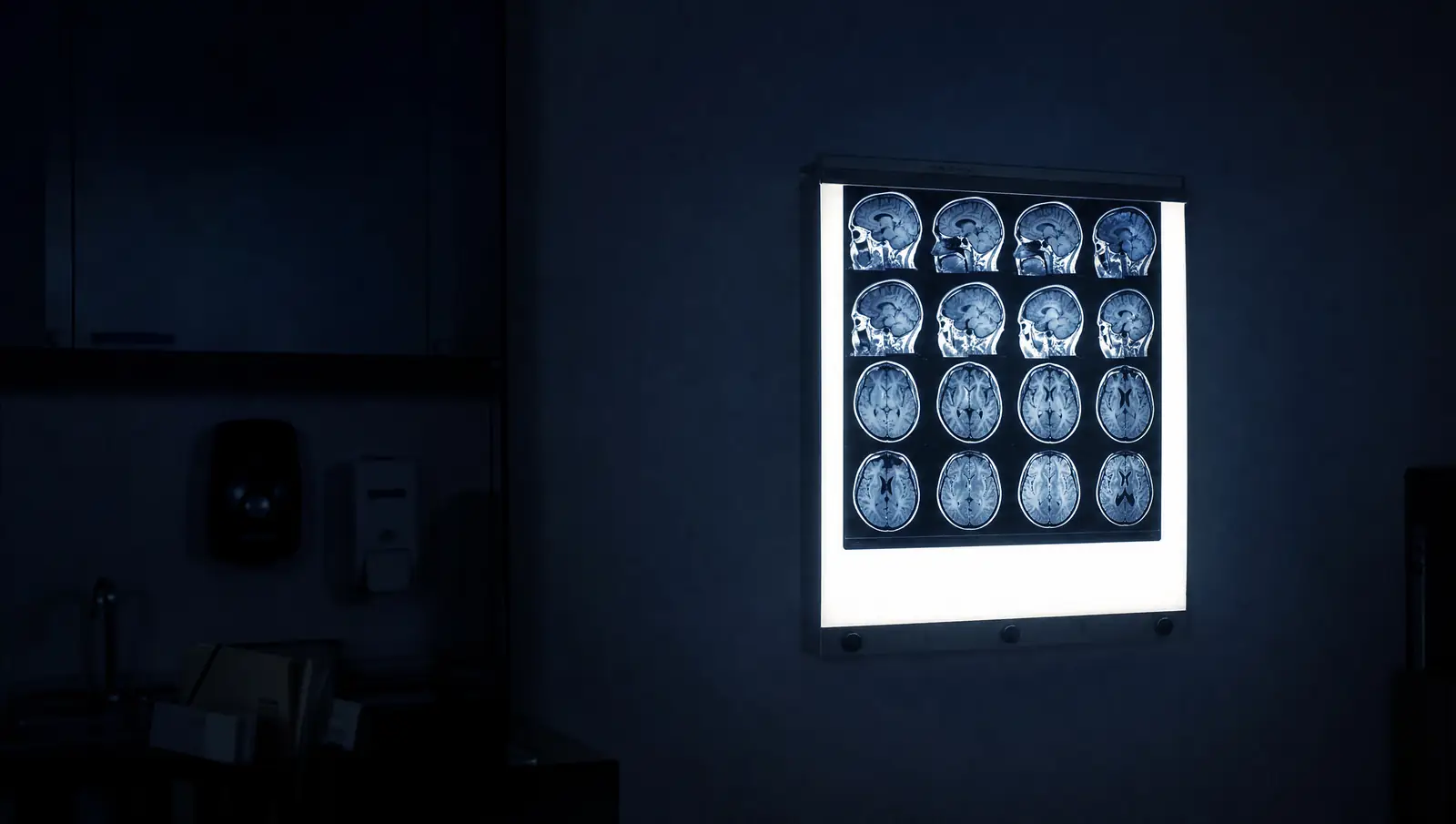
NINDS states the problem directly: even with advances in imaging resolution, currently available and clinically validated imaging technologies, blood tests, and other measures cannot always detect damage from mild, concussive injuries. A CT scan shows a skull fracture and bruising, bleeding, or swelling. MRI is more sensitive. Neither is a test for whether you can hold a conversation at work.
The proof comes from records that already exist and testing that has to be arranged, in the order it is created:
- The paramedic run sheet. Written at the scene, before anyone is thinking about a claim, and it captures the mechanism and the first neurological findings.
- The emergency department triage note and the Glasgow Coma Scale score. A 14 or a 15 is not a defense; it is a number recorded in the first hour that anchors the timeline.
- Documentation of loss of consciousness or amnesia. A witness who says you asked the same question four times carries more weight than your own recollection.
- Neuropsychological testing. NINDS describes these tests as tasks that assess memory, concentration, information processing, executive functioning, reaction time, and problem solving.
- Treating physicians who saw the change. Chart notes from neurology, neuropsychology, neuro-optometry, and vestibular therapy outweigh any opinion from a retained expert, one hired for the case.
- Before and after witnesses. A supervisor, a spouse, or a teacher who can name what you used to do and no longer do.
| What the insurer says | What answers it | Where that comes from |
|---|---|---|
| No loss of consciousness, so no brain injury | The mild band runs to a score of 15, a fully alert patient | StatPearls, Glasgow Coma Scale |
| The CT was normal | Validated imaging cannot always detect mild concussive damage | NINDS |
| You waited three weeks to treat | The reason for the gap, in writing, and who saw you during it | Records and witness statements |
| You already had headaches | Aggravation of a preexisting condition is compensable | CACI 3927 |
What validity testing is, why the defense challenges the neuropsychologist, and how a gap in treatment is explained are in our guide on how a mild traumatic brain injury is proved.
Prior conditions
The eggshell plaintiff rule is the most important damages rule in a brain injury case. California states it in CACI No. 3928: the jury must decide the full amount that will fairly compensate the plaintiff for all damages caused by the defendant, even if the plaintiff was more susceptible to injury than a normally healthy person, and even if a normally healthy person would not have suffered similar injury. The instruction quotes Rideau v. Los Angeles Transit Lines (1954) 124 Cal.App.2d 466: the tortfeasor takes the person he injures as he finds him.
CACI No. 3927 handles the other half. A plaintiff gets nothing for a condition they had before the defendant's conduct. If that condition was made worse, the jury must award damages for the effect on it, and the instruction cites Sanchez v. Kern Emergency Medical Transportation Corp. (2017) 8 Cal.App.5th 146, for the rule that a plaintiff may recover to the full extent the condition worsened.
Together, those two instructions answer the defense theme. A prior concussion, a migraine history, ADHD, anxiety, or a neck condition is not a defense. It is the reason this person was hurt worse than the next one in the same car, and California law makes the defendant responsible for the difference. We pull the prior records early, because the version that arrives by subpoena in month eleven is worse than the one we obtain in month two.
Brain injury case value
The answer starts with categories, not with a number from a webpage. Civil Code section 3333 sets the measure for a tort: the amount that will compensate for all the detriment proximately caused, whether it could have been anticipated or not.
| Category | What it covers | Who proves it |
|---|---|---|
| Past medical care | Reasonable cost of reasonably necessary care already received | Treating providers and billing records |
| Future medical care | Care you are reasonably certain to need | Treating physicians and a life care planner |
| Lost earnings | Income lost to date and going forward | Employer records and a forensic economist |
| Lost earning capacity | The ability to earn, whether or not you had a job | Vocational evaluation and economic testimony |
| Noneconomic damages | Pain, mental suffering, loss of enjoyment of life | Your own testimony and the people around you |
A life care plan is a written projection of the care a person will need for life, item by item, with a cost and a frequency on each: neurology follow-up, cognitive therapy, medication, attendant care, equipment, and home modification. CACI No. 3903A sets the standard it has to meet, the reasonable cost of reasonably necessary care the plaintiff is reasonably certain to need.
Lost earning capacity is the loss of the ability to earn money, and CACI No. 3903D says explicitly that it is not necessary to have a work history to claim it. That matters most in a young client's file. A twenty-six year old who can no longer sustain attention through an eight hour shift has a claim measured across forty working years, and it usually exceeds every medical bill in the case.
Present cash value is the deduction the defense asks for on those future numbers. CACI No. 3904A explains it: money received now grows through investment, so future economic damages are reduced to the amount that, invested today, would provide the future sum. Two details matter. The defendant carries the burden of proving present cash value through expert testimony, and CACI No. 3905A directs that noneconomic damages are not reduced to present cash value at all.
One of our own cases shows what these arguments are worth. A client was sideswiped on the freeway by a semi-truck. He never lost consciousness. He sustained a concussion that required extensive treatment with a neurologist, the insurance company opened at $100,000, and the case settled on the eve of trial for $6,300,000. How those numbers are built, including policy limits and underinsured motorist coverage, is in our guide to brain injury damages and future care. The rest are on our case results page.
Filing deadlines
Two years is the deadline most people know. The six month government claim is the one that ends brain injury claims in Los Angeles.
| Who caused it | Deadline | Statute |
|---|---|---|
| A private person or company | 2 years from the injury | Code of Civil Procedure 335.1 |
| A city, county, transit agency, or the state | 6 months to present a written claim | Government Code 911.2 |
| A public entity that rejects the claim in writing | 6 months from that notice to file suit | Government Code 945.6 |
| A public entity that never responds in writing | 2 years from accrual to file suit | Government Code 945.6 |
| An injured child | Clock generally paused until age 18 | Code of Civil Procedure 352 |
Code of Civil Procedure section 335.1 gives two years for an action for injury to, or the death of, an individual caused by the wrongful act or neglect of another. For a minor, section 352 provides that the time of the disability is not part of the time limited to bring the action, with an express exception for claims that must first be presented to a public entity.
Under a Los Angeles Superior Court notice dated December 14, 2023, personal injury cases filed in the Central District have been assigned for all purposes to Independent Calendar departments at the Stanley Mosk Courthouse since January 8, 2024. That changes the schedule a case runs on.
Weaker brain injury claims
Not every head injury is a case. Four things make these claims hard, and three of them can be addressed if you act now.
- No documented mechanism. Nothing in the record describes a blow to the head or a force that threw it, so the claim has to be built from witnesses.
- A long unexplained gap in treatment. Four months of silence reads as recovery; four months with a written reason does not.
- No objective testing and no witnesses from before. Self-report alone is the case the defense wants.
- A small policy and no second defendant. The strongest case is worth what can be collected, so thin coverage sends the work toward another responsible party or your own underinsured motorist coverage.
Some cases do not need a lawyer. A single mild concussion that resolved in ten days, with a repair the insurance company is paying and no lost work, is usually not worth a legal fee, and we say so on the phone.
Our process in brain injury cases
- 1Get you in front of the right doctors
Treatment comes before any conversation about value. That usually means a neurologist, and often neuropsychology or vestibular therapy. We do not price a case that is still being diagnosed.
- 2Pull the records that already exist
The paramedic run sheet, the emergency department chart with the Glasgow Coma Scale score, the imaging and the radiologist's report, and the prior history. We want the difficult facts first.
- 3Handle the recorded statement
You are not required to give the other side's insurer a recorded statement, and there is no reason to give one while you are still being diagnosed. We take the call.
- 4Build the before and after
Employer records, performance reviews, school records, and statements from people who knew you. Almost every file arrives without this.
- 5Track the deadline and file
The two year statute, or the six month government claim, is calendared from day one. If the number on the table ignores the future care, we file.
Next steps
You can have a brain injury with a normal CT scan, because the scan looks for bleeding and fractures, and a mild traumatic brain injury involves neither. The proof lives in the first hours of the record, in formal testing, and in the people who can describe what you were like before.
The first step is a visit to a doctor who treats head injuries, today, with a note listing every symptom rather than only the worst one. If the symptoms are not clearing, or the insurer wants a recorded statement, tell us what happened. An attorney handles the case from the first call through trial, that attorney is Josh Kohanim, and there is no fee unless we recover.