 Written and reviewed by Josh Kohanim, Esq., California Bar No. 328609 · Reviewed
In this guide
A scan that came back clean is now being read by the insurance company as proof that nothing happened. The proof of a mild TBI lies elsewhere: in what imaging cannot see, the records made in the first hours, neuropsychological testing, and an explained treatment gap. Damages are covered in our guide to brain injury damages and future care.
Limits of imaging
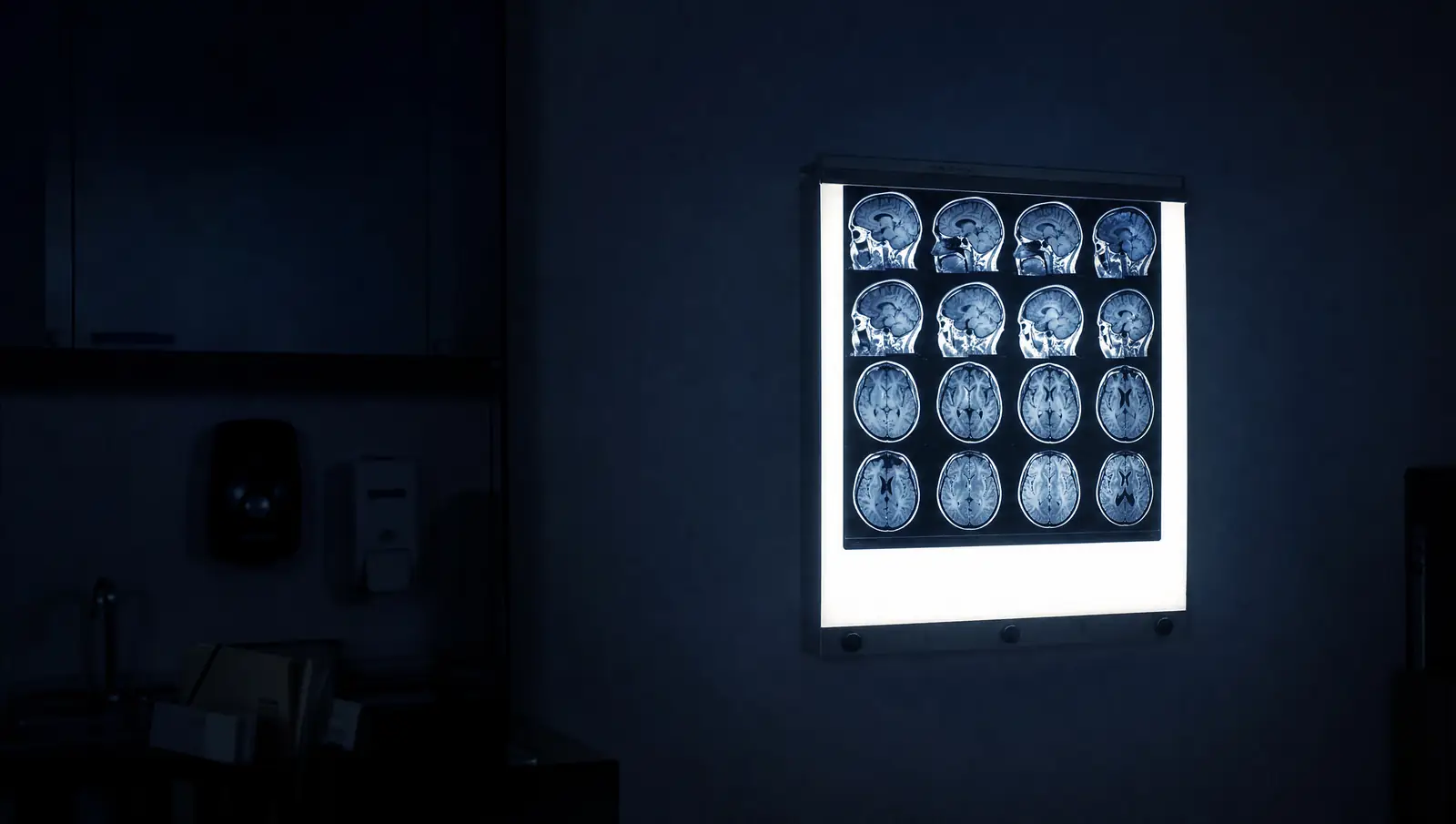
The National Institute of Neurological Disorders and Stroke (NINDS) explains what each study is for. CT imaging shows a skull fracture and any brain bruising, bleeding, or swelling. MRI is more sensitive and can pick up more subtle brain changes that a CT scan may miss. NINDS then states the limit that decides these cases: even with advances in imaging resolution, currently available and clinically validated imaging technologies, blood tests, and other measures cannot always detect damage from mild, concussive injuries.
Newer methods exist, and their status matters before anyone oversells them. NINDS lists diffusion tensor imaging, which could identify damage in white matter tracts, fluid-attenuated inversion recovery, which could detect small areas of damage, and susceptibility-weighted imaging, which could identify small and hard to detect brain bleeds. NINDS frames these as tools researchers may use. A claim built on a research sequence rather than a treating physician will not hold.
The literature has a name for the clean-scan case. StatPearls, on the National Library of Medicine's Bookshelf, calls a concussion with a normal head CT an uncomplicated mild TBI, and reserves complicated mild TBI for concussion symptoms alongside CT abnormalities. Uncomplicated is a category of mild traumatic brain injury, not a finding of no injury.
The records that already exist
Nothing on this list is created for a lawsuit, which is why it carries weight. Each one is written by a stranger with no interest in the outcome, minutes or hours after the event, and each one is dated.
| The document | Who writes it | What it establishes |
|---|---|---|
| Paramedic run sheet | Field paramedics at the scene | Mechanism, complaints, first neurological findings |
| Triage note | Emergency department nurse | Symptoms in your own words, within the hour |
| Glasgow Coma Scale score | Emergency staff | Your level of consciousness on arrival |
| Radiology report | Radiologist | What was and was not seen, and what was not looked for |
| Discharge instructions | Treating provider | That a head injury was recognized and followed |
Two more sources belong in the same category even though they are not medical: a police report or collision report that records a complaint of pain to the head, and a witness who tells someone that night that you asked the same question three times. We ask for both in the first week, because memories about that evening degrade faster than any other evidence in the file.
Glasgow Coma Scale scores
The Royal College of Physicians and Surgeons of Glasgow states that the scale has eye, verbal, and motor components and that its possible values range from 3 to 15. The StatPearls entry on the Glasgow Coma Scale, last updated June 17, 2026, sets the classification: severe is 3 to 8, moderate is 9 to 12, and mild is 13 to 15.
Mild extends to 15, and a 15 is a person with open eyes, oriented speech, and normal movement. An insurance adjuster's position that a score of 15 means no brain injury describes everyone in the mild category. What the score does is fix your condition to a time, which is why we quote it rather than avoid it.
Defense attacks on test results
NINDS describes neuropsychological testing as tests to gauge brain functioning, often used along with imaging in people who have suffered mild TBI, involving specific tasks that assess memory, concentration, information processing, executive functioning, reaction time, and problem solving. In a claim it is frequently the only objective measurement of a deficit, because it measures what the brain does rather than what it looks like.
NINDS adds a detail that is often overlooked. Many athletic organizations recommend establishing a baseline picture of brain function before any injury happens, and repeating those tests every one to two years and after a suspected concussion. If you played a sport, worked for an employer, or served in a role where baseline testing was done, that comparison is the most persuasive document available in a mild TBI case, and it is worth asking about early.
In our files the defense rarely attacks the findings directly. It attacks whether you tried. Modern test batteries include measures designed to detect inconsistent effort, and a defense neuropsychologist will go to those pages first, then to your social media, then to the difference between what you told the tester and what you told your treating doctor. The answer is consistency, built early: one account of your symptoms, given the same way to everyone, from the first visit onward.
Explaining a treatment gap
A gap is the cheapest argument the other side has, and it works because it requires no medicine. Three quiet weeks in the chart get read to a jury as three weeks of feeling fine. The answer is to put the reason in a record, and the reasons are almost always ordinary.
- A referral that took six weeks to schedule, with the referral date in the chart to prove it
- A lapse in health coverage, or a plan that refused the authorization
- No transportation, no childcare, or a job that would not give the time off
- A provider who told you to rest and return only if symptoms worsened
- Symptoms you assumed were normal, and told nobody about until someone asked
Any of those, written down when it happens, turns a gap into a fact about your life. The same gap with no explanation stays a fact about your injury.
The adjuster's arguments
| The argument | The answer | The document |
|---|---|---|
| Symptoms are subjective and self-reported | Testing measures function objectively | Neuropsychological report |
| Your own doctor never used the word concussion | The findings, not the label, carry the diagnosis | Chart notes and referrals |
| The testing was arranged by your lawyer | A treating referral, ordered for care | The referring physician's note |
| You post photos of a normal life | Function on a good hour is not function at work | Employer records and coworkers |
| Your history explains all of it | Aggravation of a preexisting condition is compensable | Jury instruction CACI No. 3927 |
Limits of this method
- No contemporaneous record at all. No paramedics, no emergency visit, no urgent care, and a first complaint months later. The claim then rests entirely on lay witnesses, meaning people who knew you rather than medical records, which is a real case but a much harder one.
- Effort measures the treating neuropsychologist could not clear. If validity indicators are abnormal, the testing stops helping and starts hurting, and no amount of argument fixes it.
- Symptoms that first appear after the claim opens. Sequence matters. A deficit reported for the first time in a deposition, the sworn questioning before trial, invites the obvious question.
- Prior testing that already showed the same profile. The case becomes one of aggravation under CACI No. 3927 rather than new injury, which is still compensable and still worth bringing, at a different value.
Proof with a clean scan
A mild traumatic brain injury is proved with a timeline rather than a picture: the paramedic sheet, the triage note, the score on arrival, the referrals, the testing, and two people who can describe the specific thing you no longer do. Assembled in order, that record is harder to argue with than any image, because every piece of it was written by someone with nothing at stake.
Start with the records you can request yourself this week. If the symptoms have run past three months, read our guide to post-concussion syndrome. If the injury happened in a crosswalk, our Los Angeles pedestrian accident page covers the liability side. The full claim, deadlines included, is on our Los Angeles brain injury attorney page.