
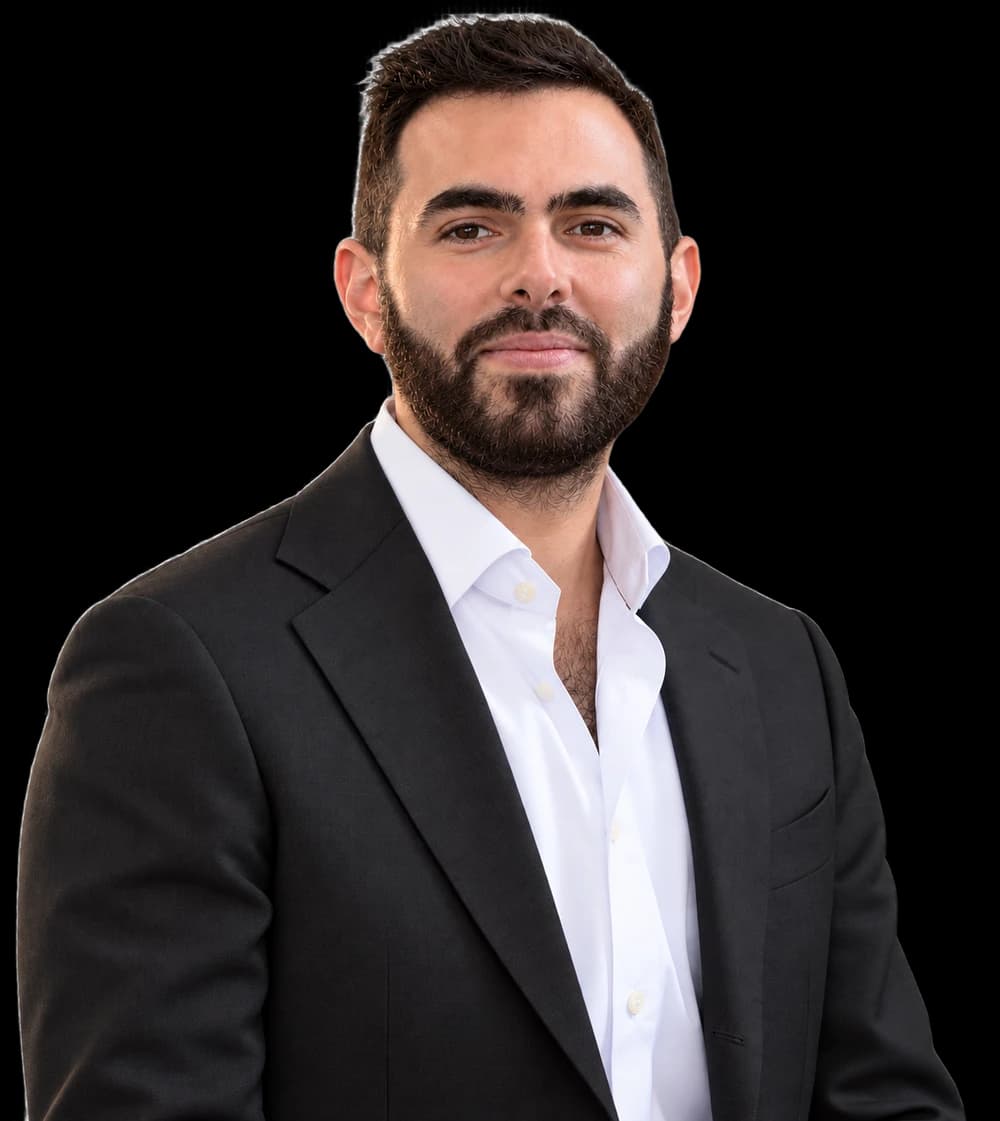
 Written and reviewed by Josh Kohanim, Esq., California Bar No. 328609 · Reviewed
Josh Kohanim, Esq., is the founder and managing attorney of Wise Law. He has dedicated his career to advocating for individuals who have suffered catastrophic personal injuries. With over a decade of extensive experience in personal injury law, including six years at a prestigious California injury law firm, Josh was mentored by some of the state’s leading trial lawyers. He has successfully represented clients in a wide array of cases, ranging from catastrophic motor vehicle accidents to intricate injuries resulting from toxic chemical exposure.
Mr. Kohanim's approach is client-centered, focusing on providing personalized legal strategies that meet the unique needs of each client. He works individually with each client to obtain a successful outcome and ensure each client is happy. Mr. Kohanim holds a juris doctorate degree from UCLA School of Law and is an active member of the Consumer Attorneys Association of Los Angeles, Consumer Attorneys of California, the American Association for Justice.
Credentials you can check
| Credential | Detail |
|---|---|
| Role | Founder and trial attorney |
| Firm | Wise Personal Injury & Accident Law, APC |
| Bar admission | State Bar of California, License No. 328609, admitted 2019 |
| Experience | More than a decade in personal injury |
| Jurisdiction | California only |
| Law school | UCLA School of Law |
| State Bar record | Listed as Joshua E Kohanim, No. 328609 |
The State Bar of California publishes a public licensee record for every lawyer it admits. The record for License No. 328609 is at apps.calbar.ca.gov, and it shows license status and any public discipline. Checking it takes about thirty seconds, and we recommend doing so before hiring any attorney, including ours.
Memberships. The firm lists five organizations for Mr. Kohanim:
- State Bar of California
- Beverly Hills Bar Association
- Consumer Attorneys of California
- Consumer Attorneys Association of Los Angeles
- American Association for Justice
Cases he takes
The firm represents injured people and families against the party that caused the harm and against that party's insurer. Mr. Kohanim's cases fall within the practice areas below, each written for Los Angeles:
- Car accidents, truck accidents, and crashes with company vehicles such as box trucks, delivery vans, and work pickups
- Motorcycle, bicycle, and pedestrian collisions
- Uber and Lyft crashes, where the coverage question is decided by what the app was doing at the moment of impact
- Slip and fall and other premises liability claims, including dog bites
- Catastrophic injuries and wrongful death
The firm's largest published recovery is a commercial vehicle case: $6,300,000 for a client sideswiped on the freeway by a semi-truck, after the insurer opened at $100,000. It settled on the eve of trial. A crash with a company vehicle is a different case from a crash with another commuter. The driver was usually working for someone, more than one company and more than one insurance policy may answer for the crash, and the evidence that decides it, from the electronic logs to the cameras to the driver's file, sits with the company until someone asks for it to be kept. How those cases work is set out on the commercial vehicle accident page.
The full list, with the guide pages under each one, is on the practice areas index, and the cities the firm serves are on the locations page.
Cases he does not take
Mr. Kohanim does not take criminal defense, family law, immigration, bankruptcy, estate planning, business litigation, or employment matters. He does not take workers' compensation as a standalone claim, although the firm does handle the separate injury claim against a third party that often runs alongside one. He does not take property damage cases with no injury, which usually move faster directly with the insurer or in small claims court. He cannot take a case outside California, because he is admitted here and nowhere else.
If your matter is on that list, say so on the first call and you will get a name to call instead.
After you call
Insurers price a file by what is documented in it, so the sequence below puts the documentation in place before anyone is asked to put a number on the case.
- 1The first call, and a straight answer
You say what happened and when. We tell you whether there is a claim, which deadlines are already running, and what we would do in the first week. The review costs nothing and we usually respond right away. If the case is not one we should take, you hear that on the call.
- 2Treatment first
We help you get in front of doctors who treat injuries like yours, and we take the insurance adjuster's calls so you are not describing an injury that has not been diagnosed yet. Gaps in treatment are the most common thing used against an injured person, and they are avoidable.
- 3The file the insurer has to answer
Medical records and bills, wage loss, the cost of care still to come, the police or incident report, photographs, video before it is overwritten, and witness statements while memories are fresh. That package becomes the demand. Without it, a demand has nothing behind it.
- 4Negotiation, then suit if the number stays wrong
The first offer is a negotiating position, not a valuation. Most claims resolve in negotiation. When the offer will not move to what the record supports, the next step is a lawsuit, and every case is built from the beginning as though it will need one.
Five problems that decide your case
Liability is denied even when it looks obvious. A store says it had no notice of the spill. A driver says the light was green. In one of the firm's cases the store denied responsibility outright, and the claim resolved for $1,000,000 after its own security footage showed staff already knew about the spill. A denial is a position, and it changes when the evidence arrives.
Treatment stops before the injury does. People feel a little better, miss two appointments, and go quiet for a month. An adjuster reads that gap as recovery, and it costs more at the end than the appointments would have cost in the middle. If treatment stops because of money rather than health, tell us, because there is usually a way to keep it going.
The policy is smaller than the injury. Policy limits are the ceiling an insurer will pay under a policy. For California auto policies issued or renewed on or after January 1, 2025, the legal minimum is $30,000 for one person under Vehicle Code section 16056. One surgery can pass that. When it does, the case becomes a search for other coverage: your own underinsured motorist policy, an employer's policy, or a commercial policy behind the driver.
The recorded statement is requested early for a reason. You are not required to give the other side's insurer one, and it is asked for while you still do not know your own diagnosis. Once the firm is retained, those calls come to us.
Liens reduce the recovery quietly. A lien is a right to be repaid out of your settlement, held by a health plan, a hospital, or a doctor who treated you on credit. Liens are negotiable, and the difference between the settlement and what reaches you is often decided after the number is agreed.
First offers versus recoveries
Six of the seven recoveries the firm publishes carry the insurer's opening offer next to them. A truck collision opened at $100,000 and resolved for $6,300,000. A rear-end crash opened at $31,500 and resolved for $1,250,000. On the slip and fall there was no offer at all, and it resolved for $1,000,000. The full ledger, with the injury and what moved each case, is on case results.
Read those figures as evidence of how a claim is worked, not as a forecast. Every one of those cases turned on facts, injuries, and coverage that are not yours. What clients say about working with the firm, in their own words and without compensation, is on client reviews.
Attorney review of this site
Josh Kohanim, Esq., reviews every page on this site, and the date of the last review is printed on each one. How we source, cite, and correct what we publish is set out in our editorial standards. If something on this site is wrong, tell us and we will correct it and note the correction.
Next steps
Mr. Kohanim founded the firm in 2020, and its headquarters are in Tarzana. How the firm is set up, and what it charges, is on our firm; the questions injured people ask most are answered on the FAQ.
If a deadline is running on your case, the next step is a phone call. Tell us what happened and when, and you will get a straight answer about whether you have a case. Start on contact us.