 Written and reviewed by Josh Kohanim, Esq., California Bar No. 328609 · Reviewed
In this guide
These claims belong to anyone riding in an Uber or a Lyft in Los Angeles County when it crashed. What matters is the first day, which policies answer for a passenger, why fault arguments rarely reach you, and what the in-app report does. Claims by drivers or by people outside the car are on our Uber and Lyft accident page.
Day one steps
Everything a passenger needs is in reach for about an hour and then starts disappearing. The trip closes, the driver leaves, and the receipt lands in an inbox nobody opens. Do these in order, and do them before you decide whether you are hurt.
- Call 911 if anyone is hurt. Saying you are injured on that call is what brings paramedics and creates the first record that someone was injured.
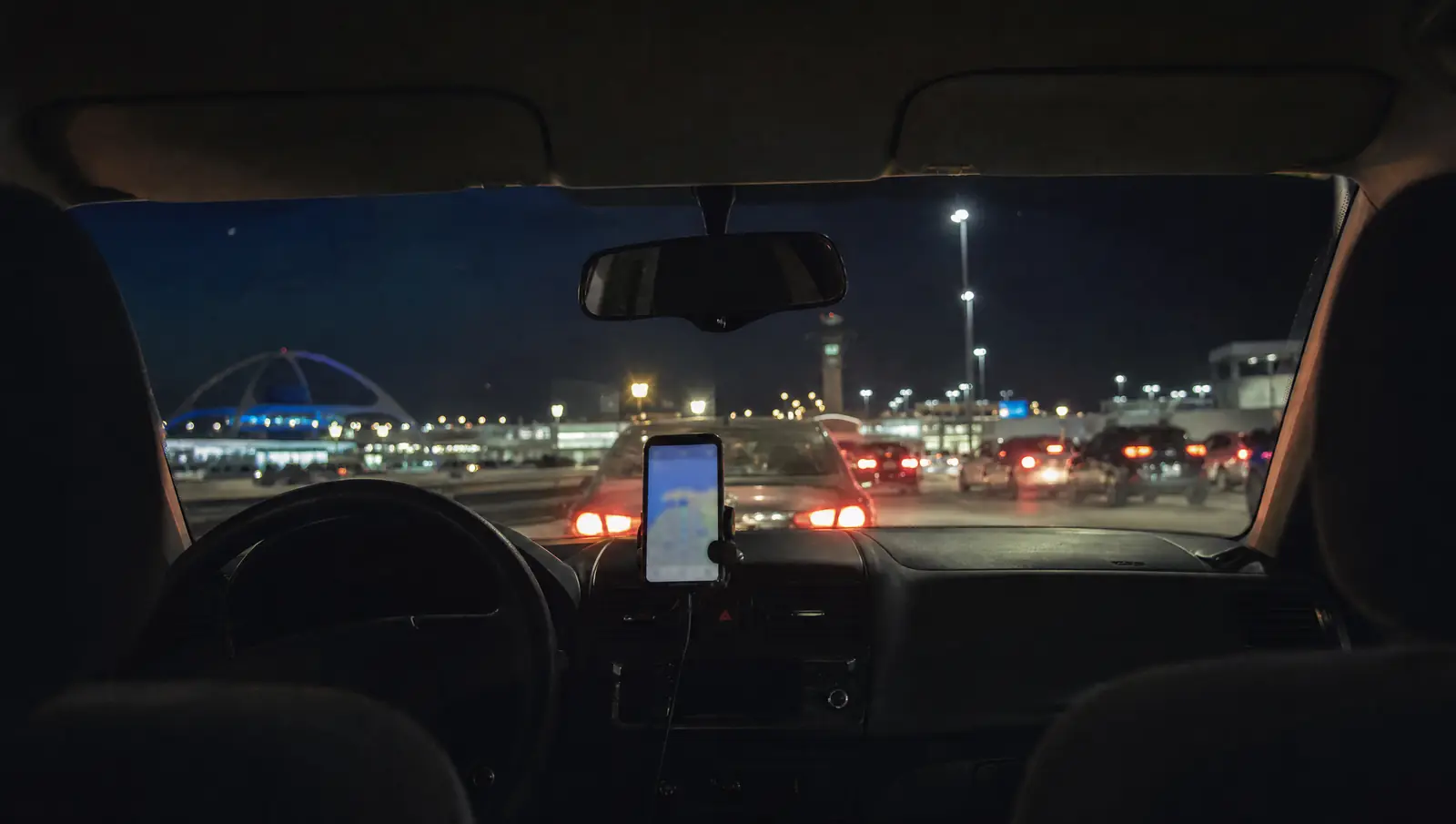
- Screenshot the trip while it is still on your screen. Driver name, vehicle, plate, pickup, destination, and the stage of the ride. This is the single most valuable item in the case.
- Photograph both vehicles where they stopped, then the street, the signal, and the inside of the car if you can.
- Get the other driver's name, plate and insurance, and one witness name and phone number.
- Save the trip receipt email. It carries the route and the timestamps that fix the coverage window.
- See a doctor the same day and report every part of you that hurts, not only the worst one.
Do not give a recorded statement to anyone in the first days, and do not accept a number over the phone. The first offer in a rideshare file arrives early precisely because the injuries are not documented yet. An offer made before the imaging is a bet that you will not get the imaging.
The policy that pays
A passenger never has to work out who was at fault before making a claim. Both routes stay open until the facts settle, and both can be pursued at the same time. What changes is which policy is primary, meaning pays first, and what has to be proved to reach the second layer.
| Who caused it | Policy that answers first | Layer behind it | What has to be proved |
|---|---|---|---|
| Your rideshare driver | The $1,000,000 rideshare policy | None usually needed | The coverage window and the driver's negligence |
| The other driver | That driver's liability policy | Rideshare uninsured motorist coverage, $60,000 per person and $300,000 per incident | The other driver's fault, then exhaustion of that policy |
| Both drivers | Both liability policies | Apportionment between them | Each driver's share of responsibility |
| A driver who fled and was never identified | Rideshare uninsured motorist coverage | Your own uninsured motorist coverage | Physical contact, a police report within 24 hours, a sworn statement within 30 days |
| A driver whose app was off | The driver's personal policy, minimum 30/60/15 ($30,000 per person, $60,000 per crash, $15,000 property damage) | Your own uninsured or underinsured motorist coverage | The app status at the moment of impact |
The case where the other driver caused the crash is where most passenger cases live, and where the numbers get tight. The layer behind the at-fault driver is governed by Insurance Code section 11580.2, and it pays your limit less what the liable driver already paid. Our page on rideshare insurance coverage runs that arithmetic with figures.
Fault arguments and passengers
An insurer that cannot deny a claim will try to discount it, and the tool for that is a share of the blame. CACI No. 711, the jury instruction on a passenger's own care, does tell a Los Angeles jury that a passenger must use ordinary care for their own safety, so the doctrine exists. It reaches a passenger who grabbed the wheel, opened a door into traffic, or rode with a driver they knew was drunk. It does not reach someone sitting belted in the back with a phone.
There is one more defense that does not reach you. Civil Code section 3333.4, Proposition 213, removes pain and suffering damages from an injured person who owned or operated an uninsured vehicle involved in the accident. A passenger owns and operates nothing in that crash, so an uninsured car sitting in your own driveway does not cost you anything here.
The in-app report
Both platforms publish a way to report a crash from inside the app. Lyft's accident reporting page asks you to complete an accident report it says takes 10 to 15 minutes, or to speak with its Claims Customer Care team. Uber tells drivers to report a crash through the Safety Toolkit in the Driver app, on its insurance page.
Use it, and understand what it is. The in-app report opens a file with the company. It is not a claim against a policy, and it is not a police report. What you type becomes a written statement in the hands of the insurer that will later evaluate your injuries. Describe what happened. Do not guess at speeds, do not diagnose yourself, and do not write that you are fine, because on day one nobody knows that yet.
Complicated passenger claims
Four situations change the shape of a passenger claim. None of them are rare in Los Angeles, and each one adds a party or a deadline.
- Several passengers were hurt. The per-incident limit is shared, so a $300,000 uninsured motorist layer across four injured riders is not $300,000 each. Order of settlement starts to matter.
- You were riding for work. A trip taken in the course of employment can add a workers compensation claim and a reimbursement claim against your recovery.
- The passenger is a minor. A child's claim has a different clock and needs court approval before a settlement is paid.
- A public entity is in the crash. A Metro bus or a street defect brings a six month written claim deadline under Government Code section 911.2.
Injury severity changes the file more than any of these. A head injury moves the case into the territory our brain injury page describes, where the proof is neuropsychological rather than orthopedic. If it was a Lyft rather than an Uber, the numbers do not change, though the reporting path does, which our Lyft accident page covers.
A driverless robotaxi ride is a different claim. The CPUC says autonomous vehicle passenger service “is not classified as a TNC” (Aug. 14, 2026), so the rideshare coverage rules above do not govern it; our page on robotaxi passenger injuries covers that case.
A passenger's steps
Three things, and none of them involve deciding who was at fault. Preserve the trip record before it closes. Get examined the same day and keep going back until you are discharged. Say nothing recorded to any insurer until the injuries are documented. The coverage was already in place before you got in the car, and it does not turn on your behavior.
The rest is arithmetic and paperwork, and it is the part we do. If you want the underlying statute and the fault analysis first, it is all on our Uber and Lyft accident page.