What to do if you are injured in a motorcycle accident The insurer assumes you were speeding.
Riders lose evidence faster and get blamed more often. California's helmet and lane splitting rules, the bike and gear kept as proof, and your own uninsured motorist coverage decide most of these claims.

On this page
Accept the ambulance, let the police write a report, and do not let anyone move or repair the bike until it has been photographed and inspected. Then keep your helmet and your gear exactly as they are, because in a motorcycle case they are evidence before they are property.
The rider's scene checklist
- Do not take off your gear and do not stand up until someone checks you. Helmets, jackets, and boots hide fractures, and adrenaline hides the rest.
- Accept the ambulance if it is offered. A refusal of transport is the first line the other side will read out of the report.
- Ask someone to photograph the scene if you cannot. The bike where it landed, the car, the debris field, the lane, the signal, the sight lines, and the things a car driver would never think to shoot: the road surface, loose gravel, the painted lines, the gap between the lanes, and where the other driver’s mirrors were pointed. Riders are often the ones who cannot take the pictures, which is why the pictures often do not exist.
- Exchange the information the statute requires. Name, address, driver’s license number, vehicle identification number, and evidence of insurance, under Vehicle Code section 16025.
- Get the driver’s explanation on the record, not yours. “I never saw you” is the most common thing a driver says at a motorcycle scene and the most useful thing an officer can write down.
- Tell the tow yard the bike is not to be repaired, released, or disposed of. Get the storage location and the daily rate in writing.
Motorcycle claim differences
The California Office of Traffic Safety reports that 583 motorcyclists were killed on California roads in 2023, down from 649 in 2022 and up from 491 in 2019. Riders are a small share of the traffic and a large share of the serious injuries, and every insurer knows it. That shapes how these claims are handled from the first phone call.
| In a car claim | In a motorcycle claim | |
|---|---|---|
| The injury fight | Was the impact hard enough to hurt anyone? | Rarely disputed. The rider absorbed the impact |
| The fault fight | Who had the right of way | Whether the rider was speeding, splitting lanes, or hard to see |
| Gear and equipment | Not an issue | The helmet becomes a comparative fault argument, and the gear is its own property claim |
| Evidence at risk | Two cars with damage patterns that survive weeks | A bike a tow yard wants to sell, and gear a hospital throws away |
| The coverage that decides it | The at-fault driver’s bodily injury limits | Your own uninsured and underinsured motorist coverage, once the minimum policy runs out |
The helmet rule and your claim
Vehicle Code section 27803 requires both the driver and any passenger on a motorcycle, motor-driven cycle, or motorized bicycle to wear a safety helmet meeting the standard in section 27802, fastened and correctly sized. That is the rule, and it applies on every California highway.
Riding without one does not end a claim. California divides fault by percentage, so a factfinder, the jury or the judge, can reduce damages by the share of the harm attributable to the rider’s own conduct, and the argument only reaches the injuries a helmet would have prevented. A broken femur is not a helmet question. The driver who turned left across your lane is still the reason the crash happened.
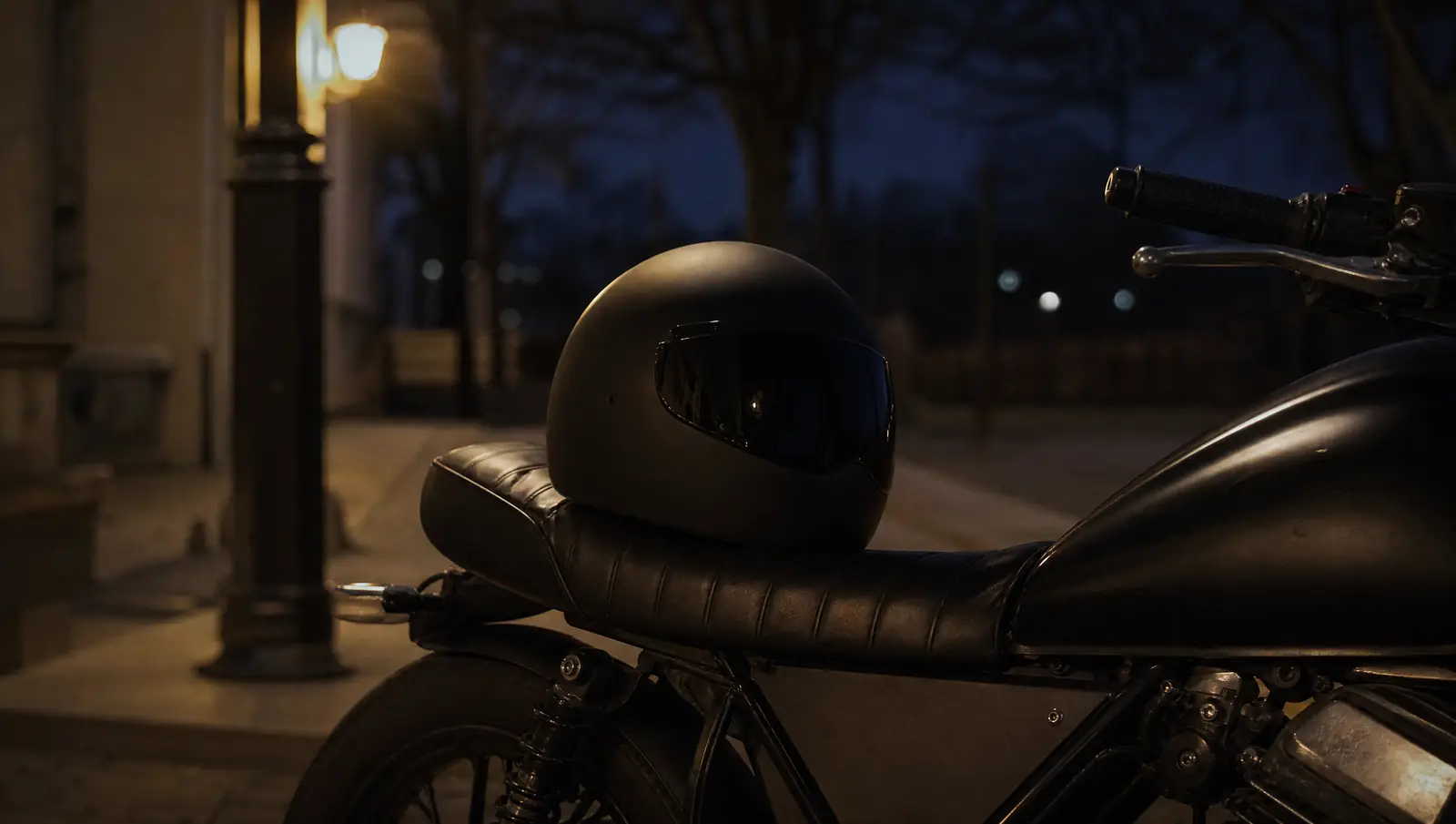
Keep the helmet either way. A cracked shell is physical proof of the force involved, and it answers the argument that the impact was minor better than any description of it.
Lane splitting and your claim
Vehicle Code section 21658.1 defines lane splitting as riding a two-wheeled motorcycle between rows of stopped or moving vehicles in the same lane, and authorizes the California Highway Patrol to develop educational guidelines for doing it safely. California is the state where this is expressly recognized in the code, and splitting lanes is not by itself a violation.
That does not stop an adjuster from treating it as fault. Every driver still owes a duty of ordinary care under Civil Code section 1714, and the basic speed law in section 22350 applies to a rider between lanes as it applies to a car in one. What decides the argument is speed differential and position, which is why the CHP’s California Motorcyclist Safety program exists and why a dashcam or a helmet camera is worth more to a rider than to anyone else on the road.
Preserving the bike and footage
In our cases this is the difference that shows up most often, and it is decided in the first two weeks, usually by someone who is still in a hospital bed and cannot make phone calls.
- The motorcycle. Tow yards accrue storage fees and then sell. Tell them in writing that the bike is evidence, and have someone photograph it from every angle before it is moved again.
- The helmet and the gear. Emergency departments cut jackets off and throw them away. Ask a family member to collect everything, including the boots and the gloves, and bag it.
- The other car. Its damage pattern shows the angle of impact. Photograph it at the scene, because it will be repaired within weeks.
- Camera footage. Business cameras, doorbells, buses, and parking structures overwrite in days. A written preservation request has to go out immediately.
- Your own camera. If you ride with a helmet or handlebar camera, pull the card and copy the file before you do anything else with the device.
Your own coverage
For any California policy issued or renewed on or after January 1, 2025, the minimum liability limits are $30,000 for one person’s injuries, $60,000 for the crash, and $15,000 for property damage, under Vehicle Code section 16056 as amended by Senate Bill 1107. A rider with a fracture, a surgery, and a week in a hospital passes $30,000 before the first billing cycle closes.
The real question in most motorcycle cases is what you carry. Underinsured motorist coverage under Insurance Code section 11580.2 pays the gap between the at-fault driver’s limits and what the injuries are worth, and uninsured motorist coverage pays when there is no policy at all. Check your declarations page. A second defendant can also change the arithmetic: the employer of a driver who was working, the owner who lent the car under Vehicle Code section 17150, or a rideshare company’s commercial policy.
The speeding assumption
An adjuster forms a view about the rider before reading the file, and so does a juror. The assumption is speed, and it is applied to riders who were doing nothing at all. Arguing with the assumption does not move it. Physical evidence does: the scene photographs, the damage geometry on both vehicles, a reconstruction where the numbers are contested, and a treating physician who can say what the forces did to a body.
The rider’s own conduct at the scene also carries further than it should. A rider who accepted transport, kept the gear, and let the officer take the statement is a different person in that file than one who waved off the ambulance and rode home. We have taken a rider case where the car insurer denied liability outright and the claim was proven with witness testimony and accident reconstruction; the outcomes we can discuss are on our case results page, with the disclaimer that prior results do not guarantee a similar outcome.
Deadlines already running
Vehicle Code section 20008 requires a written report to the CHP or the city police within 24 hours of a crash that injures or kills anyone. Section 16000 and the DMV require an SR-1 within 10 days if anyone was hurt or property damage exceeds $1,000, regardless of fault. Code of Civil Procedure section 335.1 gives you two years to file suit for the injury, and section 338(c) gives you three for the bike and the gear.
If the crash involved a public bus, a city vehicle, or a roadway defect such as an unrepaired trench or a bad grate, Government Code section 911.2 requires a written claim within six months. Roadway defect cases are more common for riders than for drivers, because a surface a car never notices can put a motorcycle down. Six months is not long when the first two are spent in treatment.
Questions riders ask after a crash
I was not wearing a helmet. Do I still have a claim?
Was lane splitting my fault?
The tow yard wants to release or sell my bike. What do I do?
The driver said they never saw me. Does that help?
Can I claim my helmet, jacket, and boots?
The other driver only had minimum insurance. What now?
How long do I have to bring a claim?
Steps after a motorcycle crash
Get treated first and get transported if it is offered. Make sure the crash is documented by someone, even if that someone is a bystander with a phone. Stop the tow yard from scrapping the bike, keep the helmet and the gear, and chase the camera footage before it is overwritten. File the SR-1 within 10 days, calendar six months if a public entity was involved, and find out today what your own uninsured and underinsured limits are.
Riders get blamed more often and lose evidence faster than anyone else on the road, which is why the first two weeks decide so much. Our Los Angeles motorcycle accident lawyer page explains how we build these cases, and there is no fee unless we recover.