 Written and reviewed by Josh Kohanim, Esq., California Bar No. 328609 · Published · Reviewed
In this guide
This page is for tenants and guests hurt at an apartment building in Los Angeles County, and for families of people who died there. It explains the rules that apply across the building and sends you to the guide for your situation. If you were attacked, our negligent security guides, linked below, use a confidential form that does not ask what happened. This page was checked against the statutes and jury instructions it cites on November 25, 2026. It is general information about California law, not advice about any one case.
The landlord's duty of care
California's general rule is that everyone is responsible for an injury caused by a lack of "ordinary care or skill in the management of his or her property" (Civil Code section 1714(a)). The jury instructions turn that into a claim. Under CACI No. 1000 (2026 edition), an injured person must prove that the defendant "owned/leased/occupied/controlled the property," was "negligent in the use or maintenance of the property," that the person was harmed, and that the negligence "was a substantial factor" in causing the harm.
CACI No. 1001 says a person who controls property "must use reasonable care to discover any unsafe conditions and to repair, replace, or give adequate warning of anything that could be reasonably expected to harm others." Under CACI No. 1003, the owner is negligent if a condition "created an unreasonable risk of harm," the owner "knew or, through the exercise of reasonable care, should have known about it," and failed to repair it, protect against it or warn of it.
Common areas and your own unit
CACI No. 1006, the landlord's duty, draws the line that decides many apartment cases. A landlord "must conduct reasonable periodic inspections of rental property whenever the landlord has the legal right of possession," must inspect before handing over a unit, and "The inspection must include common areas under the landlord's control." After a tenant moves in, the landlord must take reasonable precautions against an unsafe condition in an area it controls "if the landlord knows or reasonably should have known about it." In an area the tenant controls, the landlord answers only with "actual knowledge of the condition and the right and ability to correct it."
The same instruction's notes say a landlord "cannot escape liability for failure to maintain property in a safe condition by delegating the duty to an independent contractor." Our guide to apartment and stairway falls applies these rules to stairs, walkways, garages and units, and explains why the owner and the management company are often both in the case.
Guides by situation
| What happened | What usually decides it | Our guide |
|---|---|---|
| A fall on stairs, a walkway or in a garage | Whether the landlord knew or a reasonable inspection would have found the hazard | Apartment and stairway falls |
| A fall inside your unit | Whether the landlord actually knew, usually from a repair request | Apartment and stairway falls |
| A drowning or near drowning in the building's pool | Gates, latches, supervision and whether the rules were enforced | Swimming pool and drowning |
| An assault by an intruder | A broken gate, door or lock, or a dark common area, that management knew about | Apartment and condo assaults |
| An attack by another tenant | Written reports of threats or violence by that person | Attacked by another tenant |
| A shooting | What the landlord knew beforehand, and whether a reasonable step would likely have prevented it | Suing a landlord after a shooting |
| A building in public housing | A written claim within six months | Injured on government property |
Habitability laws and safety
Two housing statutes describe the condition the building should be in. Civil Code section 1941 says the lessor of a building for people to live in "must, in the absence of an agreement to the contrary, put it into a condition fit for such occupation, and repair all subsequent dilapidations thereof, which render it untenantable." Section 1941.1(a) lists what a dwelling must not substantially lack, including "Floors, stairways, and railings maintained in good repair," electrical lighting "maintained in good working order," and "all areas under control of the landlord" kept clean and "free from all accumulations of debris."
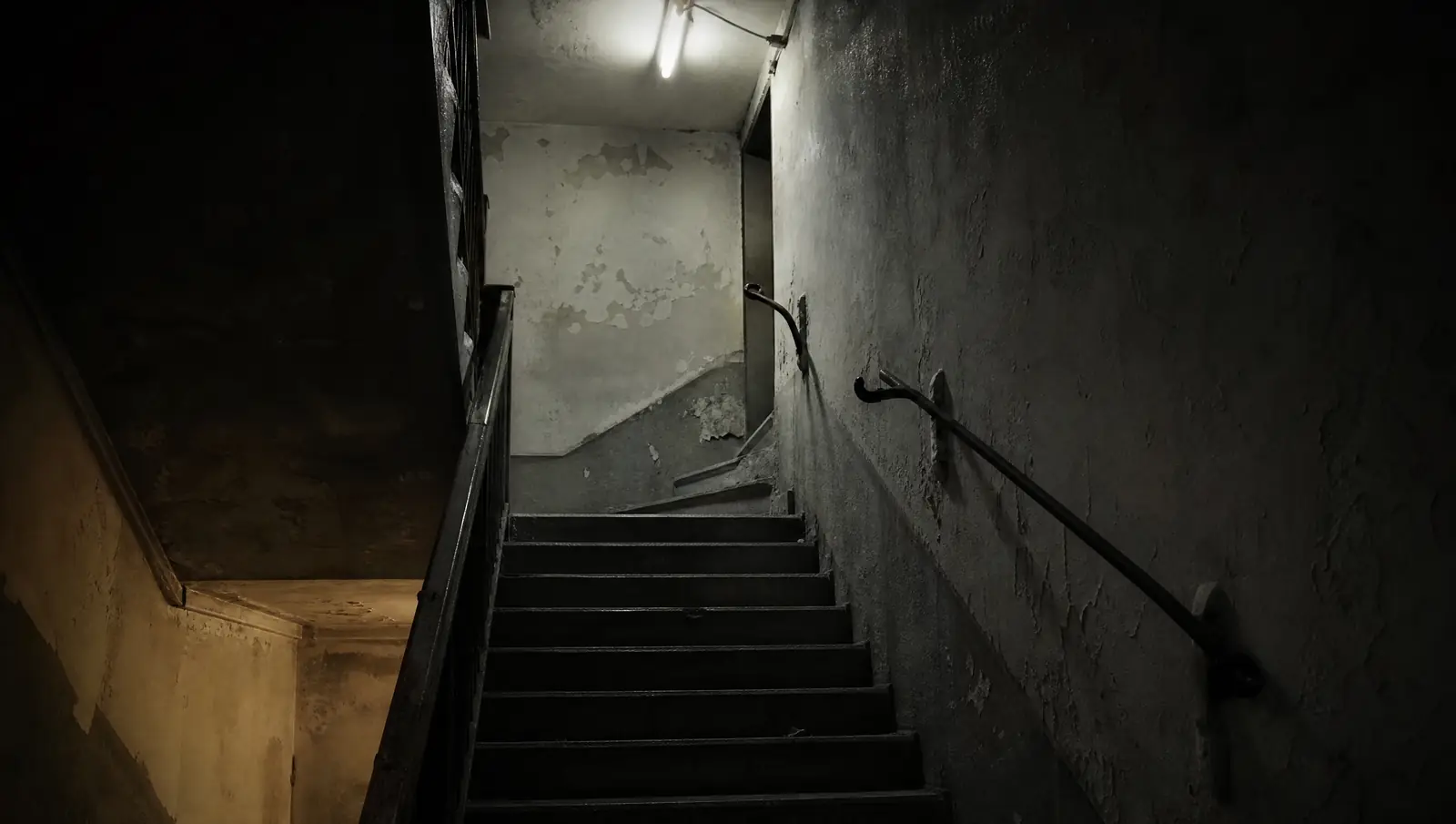
These are housing standards, not injury statutes, and a violation does not by itself win an injury claim. They show, in the Legislature's words, what a broken railing or a dark stairwell should have looked like. CACI No. 1004 adds that an owner need not warn of a hazard "so obvious that a person could reasonably be expected to observe it," but still "must use reasonable care to protect against the risk of harm" when someone has to encounter it out of necessity, such as the only stairway to a unit.
Locks and crime
Civil Code section 1941.3 requires a landlord to "Install and maintain" a working dead bolt on each unit's main entry door and working locks on windows designed to be opened, and to "Install" locking mechanisms on the exterior doors to common areas in multifamily buildings. The common-area paragraph "does not require the installation of a door or gate where none exists on January 1, 1998." The tenant must report a broken dead bolt or window lock in the unit, and the landlord is liable under the section only if it fails to fix it "within a reasonable time" after notice. A violation "shall not broaden, limit, or otherwise affect" the landlord's general duty of care.
For crime, CACI No. 1005 says a landlord "must use reasonable care to protect" tenants "from another person's criminal conduct on" its property "if the" landlord "can reasonably anticipate that conduct." A judge decides whether that duty exists. A landlord is not responsible for every crime on its property, and the proof is usually what management knew before. Our guide to what a landlord must do about crime covers each measure, and our negligent security evidence checklist lists the records to keep.
Pools at apartment buildings
The state's pool barrier rule for new and remodeled pools is written around a building permit at a private single-family home (Health and Safety Code section 115922), and section 115925 says it does not apply to an apartment complex, so it is not the rule that decides an apartment pool case. An apartment pool is held to the ordinary premises duty, the landlord framework in CACI No. 1006: gates and latches, fencing, depth markings, posted rules and whether anyone enforced them. Our swimming pool and drowning guide explains those claims, including a near drowning that leaves a brain injury.
Dog bites and other hazards
A dog's owner is strictly liable for a bite under Civil Code section 3342, and a landlord can be liable too, but only if it actually knew of the dangerous dog and had the right to have it removed; our dog bite page explains both. Elevators, fires and falling objects follow the same premises rules, and our premises liability overview covers them.
Claims by current tenants
Many people worry about staying in the building after a claim. Civil Code section 1942.5(d) makes it unlawful for a lessor to raise rent, decrease services, force a tenant out, sue to recover possession or threaten any of those "for the purpose of retaliating against the lessee because the lessee has ... lawfully and peaceably exercised any rights under the law." In a case under that subdivision, the tenant "shall bear the burden of producing evidence" that the conduct was retaliatory, so keep written records of every notice and message.
Filing deadlines
Most injury and wrongful death lawsuits against a private landlord must be filed within two years (Code of Civil Procedure section 335.1). If a public agency owns the building, a written claim for an injury or death generally must be presented "not later than six months" after the claim arises (Government Code section 911.2); our post on how to file a government claim shows how. Our deadline calculator counts the dates, and a lawyer should confirm them in any one case.
No fee unless we recover. If there is no recovery, you owe no fee and no case costs.
Sources cited
- Civil Code section 1714: leginfo.legislature.ca.gov
- Civil Code section 1941: leginfo.legislature.ca.gov
- Civil Code section 1941.1: leginfo.legislature.ca.gov
- Civil Code section 1941.3: leginfo.legislature.ca.gov
- Civil Code section 1942.5: leginfo.legislature.ca.gov
- Code of Civil Procedure section 335.1: leginfo.legislature.ca.gov
- Government Code section 911.2: leginfo.legislature.ca.gov
- Health and Safety Code sections 115922 and 115925: leginfo.legislature.ca.gov
- Judicial Council of California Civil Jury Instructions (CACI), 2026 edition, Nos. 1000, 1001, 1003, 1004, 1005 and 1006: courts.ca.gov