Elder injuries in Los Angeles A fall in a facility can be neglect.
Most falls involving an older adult are ordinary negligence claims. A narrower set are neglect under California's Elder Abuse Act, which demands a higher standard of proof and pays attorney fees and costs on top of the damages.

On this page
Most injuries to older adults in Los Angeles are ordinary negligence claims, and a narrower set are neglect under the Elder Abuse and Dependent Adult Civil Protection Act, a label that changes the case. Welfare and Institutions Code section 15657 requires proof by clear and convincing evidence, a higher standard of proof than an ordinary negligence claim, of recklessness, oppression, fraud, or malice. In exchange it awards the plaintiff reasonable attorney's fees and costs and lifts the limits that a survival action otherwise puts on damages after a death.
Three claims with different damages
Negligence is the failure to use the care a reasonable person would use, and it is what most property and fall cases are built on. Neglect under the Act is a defined term about custodial obligations. Professional negligence is the performance of medical services below the standard of the profession. An elder is any person residing in California who is 65 or older. One set of facts can look like all three, and which one it is decides the deadline, the proof, and the money. Financial abuse of an elder, criminal charges, and the conservatorship process run separately and are not covered here.
| The claim | What has to be proved | What it adds |
|---|---|---|
| Ordinary negligence | A failure to use reasonable care that caused the injury | Economic and non-economic damages. Each side pays its own fees. |
| Neglect under the Elder Abuse Act | Neglect as defined in section 15610.57, plus recklessness, oppression, fraud, or malice, by clear and convincing evidence | Reasonable attorney's fees and costs, and the section 377.34 limits do not apply, capped by Civil Code 3333.2(b) |
| Professional negligence by a health care provider | Care below the professional standard, under the laws specific to those claims | Governed by section 15657.2, so the Act's heightened remedies do not attach |
Elder neglect defined
Section 15610.57 defines neglect as the negligent failure of any person having the care or custody of an elder or dependent adult to exercise the degree of care that a reasonable person in a like position would exercise, and it also covers an elder's own negligent failure to provide self care. The subdivision that matters in a fall case is the list of what neglect includes.
- Failure to assist in personal hygiene, or in the provision of food, clothing, or shelter.
- Failure to provide medical care for physical and mental health needs.
- Failure to protect from health and safety hazards.
- Failure to prevent malnutrition or dehydration.
- Failure of a person with substantial inability to manage their own finances or resources, or with poor cognitive function, mental limitation, or chronic poor health, to meet their own needs.
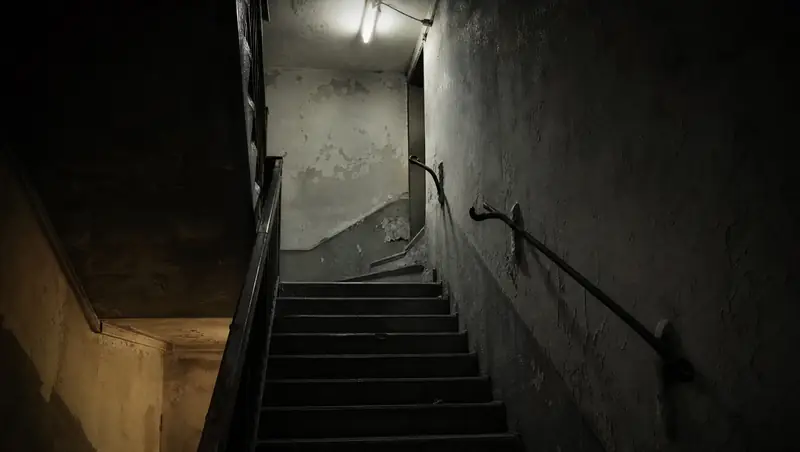
The third item is the one a fall case is usually built on. Failure to protect from health and safety hazards is a custodial duty, and an unlit stairway, a missing bed rail assessment, a wheelchair left unsecured, and a resident left to walk alone after three documented falls all fall within it. That is why the chart, the care plan, and the incident reports matter more than any photograph.
Neglect versus medical malpractice
The defense move in nearly every facility case is to relabel neglect as professional negligence, because section 15657.2 provides that a cause of action against a health care provider based on professional negligence is governed by the laws that specifically apply to those claims. The California Supreme Court answered that in Delaney v. Baker (1999) 20 Cal.4th 23, and the opinion is public at CourtListener.
Rose Wallien was 88. She fractured an ankle, entered a skilled nursing facility on April 20, 1993, and died there on August 9, 1993 with stage III and stage IV pressure ulcers on her ankles, feet, and buttocks. A stage IV ulcer means the tissue had been eaten away to the bone. There was evidence she was frequently left lying in her own urine and feces for extended periods. The jury found the defendants had not acted with oppression or malice, but had been reckless, and the trial court awarded $185,723.50 in attorney fees and $32,291.24 in costs under section 15657.
The Court held two things that decide cases today. First, neglect as defined in the Act does not refer to the performance of medical services in a manner inferior to the knowledge, skill, and care ordinarily possessed by the profession. It refers to the failure of those responsible for attending to the basic needs and comforts of elderly or dependent adults, regardless of their professional standing, to carry out their custodial obligations. Second, if the neglect is reckless, or done with oppression, fraud, or malice, the action falls within section 15657 and cannot be treated as merely based on professional negligence under section 15657.2.
The Court also explained why the bar is set where it is. Only egregious acts were meant to be sanctioned under section 15657, and the requirement of clear and convincing evidence is what marks that limit. A single fall, standing alone, is usually not that. A fall that follows three earlier falls, a care plan that was never updated, and a call light that went unanswered can be.
Elder Abuse Act remedies
Section 15657 lists its remedies plainly. The court shall award reasonable attorney's fees and costs, and costs include reasonable fees for a conservator's services devoted to the litigation. The limitations that Code of Civil Procedure section 377.34 imposes on damages do not apply, so the pain and suffering of an elder who has since died is not automatically lost, although the damages recovered shall not exceed what Civil Code section 3333.2(b) permits. That subdivision started at $350,000 for a non-death case on January 1, 2023 and rises by $40,000 every January 1 for ten years, to $750,000. Employer liability under the section has to satisfy the standards in Civil Code section 3294(b).
The standard of proof moved on January 1, 2026. Section 15657.02, added by Assembly Bill 251, lets a court set the standard for section 15657 remedies at a preponderance of the evidence where the plaintiff prevails on a discovery motion, a court request in the pretrial exchange of evidence, because of spoliation of evidence by the defendant, or where a judge or arbitrator finds at any point that the defendant committed spoliation. The court issues that finding in writing.
The section is narrow on purpose. It applies to claims against a licensed residential care facility for the elderly, a licensed adult community care facility, or a skilled nursing facility, and not to a facility owned or operated by a general acute care, acute psychiatric, or special hospital. Spoliation is defined as the intentional improper alteration of evidence, or the intentional concealment or destruction of records, done with intent to prevent the evidence from being produced and materially prejudicing the other party. In deciding whether it happened, a judge considers whether records were destroyed before a legally required retention period ran, in contravention of the party's own written retention policy, or after a written directive to preserve them.
That is the practical reason a preservation letter, a written demand that the facility keep its records, goes out in the first week of one of these cases. The letter is what turns a later missing chart into a finding, and a finding into a standard of proof.
Falls at a property
Most calls we get about an older parent are not facility cases at all. They are falls on stairs, at a threshold, on a poorly lit landing, or in a garage, in a building the person lives in or was visiting. Those run as premises claims, meaning claims against whoever controls the property: the owner's duty, whether the hazard was known or should have been known, and what the building did about it. Our guide to apartment and stairway falls covers handrails, lighting, and how notice gets proved in a building, and our Los Angeles premises liability page covers who can be held responsible when more than one company manages the property.
Two facts change the value of an older adult's fall case more than anything else, and both are medical. A hip fracture at eighty is a different injury than the same fracture at forty, because the recovery is longer and the loss of independence is often permanent. A defense argument about a prior condition arrives in every one of these files, and the answer to it is the medical record from before the fall.
Exceptions to the elder abuse rules
- The injured person is under 65. Section 15610.27 defines an elder as a person residing in this state who is 65 or older. A younger adult may still qualify under the Act's separate dependent adult definition, and otherwise the case is an ordinary negligence claim.
- The complaint is about clinical judgment. A misread scan, a surgical error, or a medication decision points at section 15657.2 and the laws that govern professional negligence, which carry their own deadline and their own damages cap.
- The facility is public. A county-operated facility puts the family on the six-month government claim clock instead of the ordinary deadline. Our guide to being injured on government property explains the claim, and our deadline table has the citations.
- An arbitration agreement was signed at admission. Expect the defense to raise it, and expect that question to be litigated before anything else in the case is.
- The elder has died. The Act is its own track. Section 377.34, which otherwise limits what an estate can recover, states that nothing in it affects claims brought under the Elder Abuse Act, and section 15657(b) says the same from the other direction.
One resource is worth knowing whether or not there is ever a case. The California Department of Aging's Long-Term Care Ombudsman Program assists residents of long-term care facilities with day to day care, health, safety, and personal preferences, serves residents of any age, and runs a hotline at 1-800-231-4024 that takes calls 24 hours a day, seven days a week.
Questions families ask after a parent is hurt
Is every fall in a nursing home elder abuse?
What does the Elder Abuse Act get that a negligence claim does not?
Can a nursing home defend by calling it medical malpractice?
Who counts as an elder?
What should we collect in the first week?
Does it change anything that our mother has already passed away?
Your type of claim
Start with who had custody and what they were supposed to do about a known hazard. If the answer is a landlord or a property manager who let a stair or a light go, it is a premises case, and the record you need is the building's. If the answer is a facility that was responsible for a person's basic needs and safety and did not meet them, section 15610.57 is the definition to read, and whether the conduct was reckless is the question the case turns on. If the complaint is about how a medical decision was made, section 15657.2 sends it somewhere else.
The next step is the same in all three. Request the records in writing before they can be altered or lost, get the medical picture from before the fall, and get the deadline on a calendar. Our frequently asked questions page covers how a claim moves from there, and there is no fee unless we recover.